
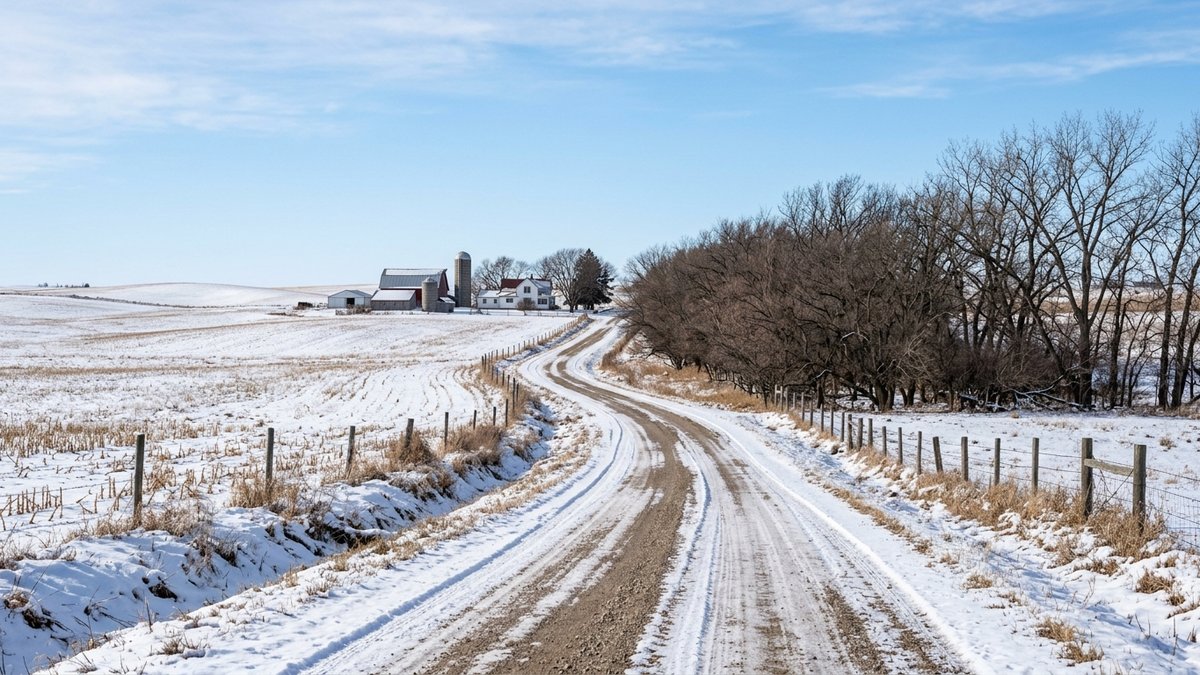
What does the private road legally connect to?
Start with the access right itself, not the appearance of the gravel, dirt, or paved surface. Ask for the title commitment, deed, plat, recorded access easement, and any road-maintenance agreement tied to the property. Confirm that the documents describe a route from this parcel to a passable public highway or other authorized connection. Then compare the legal description and map with the route you can actually drive.
The route on paper may not be the route used in daily life. Gates, branches, field entrances, changed driveways, or a neighboring parcel may make the physical path different from the recorded description. A buyer should have a title company and a legal professional explain what the documents mean for the specific parcel. They can also help separate a recorded right from an informal practice that neighbors have followed for years.
Property boundaries matter here because the road, turning area, gate, or bridge may sit near a line that is not obvious from the driveway. Use the South Dakota property-boundary guide as a companion question list, then rely on the appropriate professionals for the parcel documents and any needed survey work.
What do the recorded easement and road agreements actually allow?
Read the full recorded easement instead of stopping at a title reference. Look for the width and location of the right of way, the people or parcels allowed to use it, gate provisions, utility rights, repair duties, cost sharing, access for deliveries, and language about changes to the route. Also ask whether later amendments, private agreements, or association documents affect the road.
South Dakota Codified Law 31-22-1 describes a procedure for certain isolated tracts to seek access to a highway. That is a narrow statutory process, not proof that a candidate property already has adequate recorded access. A related statute, Codified Law 31-22-8, addresses maintenance expense for a right of way laid out under that chapter. It does not establish the same rule for every private-road agreement. The recorded language and the facts of the property control the question, so a title or legal professional should explain how any statute applies.
Ask for a plain answer to four questions: Who has the right to use this route? What route and width are described? Who pays when the road needs work? What happens if a user refuses to contribute? If the documents are silent, conflicting, or hard to match to the driven route, mark legal access as unresolved until the appropriate professional reviews it.
How should you test the road in real South Dakota conditions?
Drive the full route and inspect the parts that affect reliable use. Check the road width, grades, turns, gates, culverts, bridges, drainage, surface condition, sight lines, and space for a vehicle to turn around. Note where water collects, where a heavy vehicle would have trouble passing, and whether the driveway connection is practical for moving trucks, service vehicles, deliveries, and the vehicles you expect to own.
One sunny showing does not answer a winter access question. Ask who plows the road, what route is covered, when service begins, how gates are handled, and what happens after drifting, thawing, or a storm. If the road is not observable in the season that matters most to you, document the limitation and ask for records or a professional opinion that fits the question. The winter road access guide for rural South Dakota homes can help organize that conversation.
Emergency access deserves its own check. Ask the local fire or EMS provider what information they need about the address, route, gates, bridges, and turnaround space. Their answer is not a substitute for title review or a road inspection, but it identifies operational questions that a listing description cannot answer. Ask the county or township about local road practices, subdivision standards, or road-district questions that fall within its role. Practices vary by location.
Who is responsible for maintenance, plowing, and utility access?
Do not treat a shared road as a single responsibility. Separate the legal right to use the route from the day-to-day work required to keep it usable. Ask who hires snow service, grades or repairs the surface, clears drainage, replaces a culvert, maintains a gate, and coordinates work when several parcels depend on the same segment. Then compare the answer with the recorded documents and any current agreement.
A simple responsibility map keeps each question with the person or organization that can address it. Keep copies of written answers and note the date, because a neighbor’s understanding may not match the recorded agreement.
| Question | Who to ask | What to document |
|---|---|---|
| What access is recorded? | Title company and legal professional | Easement, legal description, plat, amendments |
| Who maintains the road? | Current owners or road association | Agreement, cost allocation, repair standards |
| What happens in winter? | Snow contractor and current users | Service route, trigger, timing, gate plan |
| Can emergency and delivery vehicles use it? | Fire or EMS provider and local officials | Route concerns, address details, turnaround needs |
| How do utilities reach the property? | Utility providers and title professional | Utility easements, route, shared maintenance terms |
| What outside requirements apply? | Lender and insurance professional | Property-specific documents, conditions, exclusions |
The point is not to collect casual assurances. It is to find the document, provider, or professional responsible for each material question before you treat the road as a settled feature of the acreage.
How should you compare a private-road acreage with other properties?
Use four decision gates: legal right, physical usability, shared-cost clarity, and third-party acceptance. A property is still unresolved when the route shown on paper does not match the route driven, maintenance language is silent or disputed, winter service is uncertain, or a lender or insurer will not accept the arrangement for its own purposes. Those gates give you a consistent way to compare two acreages even when one road looks better at the showing.
Build a property-specific access file with the title commitment, deed, plat, recorded easement, maintenance agreement, plowing information, utility notes, inspection observations, and questions sent to the relevant providers. Add the recurring costs you can document, such as a shared maintenance contribution or snow-service charge. Do not estimate a precise total when the agreement or service terms do not provide one.
The comparison should also include the access route’s effect on daily work. Consider the distance to a public highway, the time and effort required after a storm, room for deliveries, access for contractors, and whether gates or narrow turns conflict with your vehicles or equipment. These are practical fit questions, not promises about future road conditions.
If you are comparing rural properties from outside the area, a remote South Dakota home-inspection checklist can help you assign someone to observe the route and property questions you cannot see in person. It does not replace review of the recorded access rights.
What should you resolve before making an offer?
Before you decide that a private-road acreage fits, write down the unanswered access questions and assign each one to the right source. Title and legal questions belong with a title company or legal professional. Local road and subdivision questions belong with the county or township. Winter service questions belong with the contractor or the people who use the route. Utility questions belong with the provider. Lender and insurance questions belong with those professionals.
Then compare the documents with the road itself. If the recorded right does not cover the route to the highway, if a gate or bridge creates an unresolved restriction, if no one can explain maintenance costs, or if winter and emergency use remain uncertain, keep the property in the unresolved category until the issue is addressed. A statutory access procedure for a qualifying isolated tract is not a substitute for confirming the candidate property’s current recorded rights.
For a South Dakota acreage search, Michelle Maloney Real Estate can help you identify property-specific questions and coordinate the local professionals who should answer them. Contact the Move to SoDak team when you want to compare an acreage’s access setup with the rest of the property decision.
Frequently asked questions
Does a private road mean a South Dakota acreage has legal access?
No. Review the title commitment, deed, plat, and recorded access easement to confirm the route and rights for the specific parcel. A road that exists physically may not answer every legal access question.
Who usually pays to maintain a private road?
The answer depends on the recorded easement, maintenance agreement, or other property-specific documents. Do not generalize a rule from one statute or another road. Have a title or legal professional explain the applicable language.
What should buyers ask about winter access?
Ask who plows, which segments are covered, how gates are handled, when service begins, and what happens after drifting or thawing. Drive the full route and ask local officials or current users questions within their roles.
Should buyers ask a lender or insurer about a private road?
Yes. Ask those professionals what property-specific documents, conditions, or exclusions they need before relying on the road arrangement. Their requirements are separate from title review and local road practice.
Can emergency vehicles reach a rural property on a private road?
Ask the local fire or EMS provider about the route, gates, bridges, address information, and turnaround concerns. The provider can address operational questions, while title and legal professionals address recorded rights.
SourcesSouth Dakota Codified Law 31-22-1: Right to access from isolated tract to highway · South Dakota Codified Law 31-22-8: Maintenance of right-of-way by dominant landowner · South Dakota Real Estate Commission Consumer Information
Related South Dakota resources

Work with Michelle Maloney
Bring Michelle the town, property type, timeline, and the decision you are stuck on. She will help you compare Sioux Falls, Vermillion, Yankton, Tea, Beresford, Elk Point, and the Sioux City corridor against the way you actually need to live or sell.