
What is the first boundary question to answer?
Start by asking whether the exact boundary location matters to the acreage purchase. If a fence, driveway, outbuilding, shared road, utility corridor, future improvement, or access route affects the decision, the records and the ground need to be compared before the boundary is treated as settled.
Collect the deed, legal description, recorded plats, prior surveys, title exceptions, easements, access agreements, and available corner records. These documents give the surveyor, title professional, attorney, county, or utility a clearer set of questions to answer for the parcel. They also help you notice when the written description, a recorded right, and the way the land is occupied do not line up.
The South Dakota Board of Technical Professions says a boundary survey is the certain way to locate property boundaries. Its FAQ also distinguishes a mortgage inspection from a legal boundary survey. That distinction is the key starting point for acreage buyers. A lender-related inspection can be part of a transaction without resolving the boundary question you need answered.
A boundary concern is specific to the property. The state sources explain the difference between survey types and the role of registered surveyors, but they do not determine the line for a particular acreage. The South Dakota acreage buying guide can help organize the wider property search. For the boundary itself, use the documents and the qualified professional responsible for that question.
Why are fences and online parcel lines not enough?
A fence can show how the land has been occupied without establishing the legal boundary. The same caution applies to an online parcel line. Those tools may help orient a buyer during a first visit, but they do not replace the records and survey work needed when the line affects the purchase.
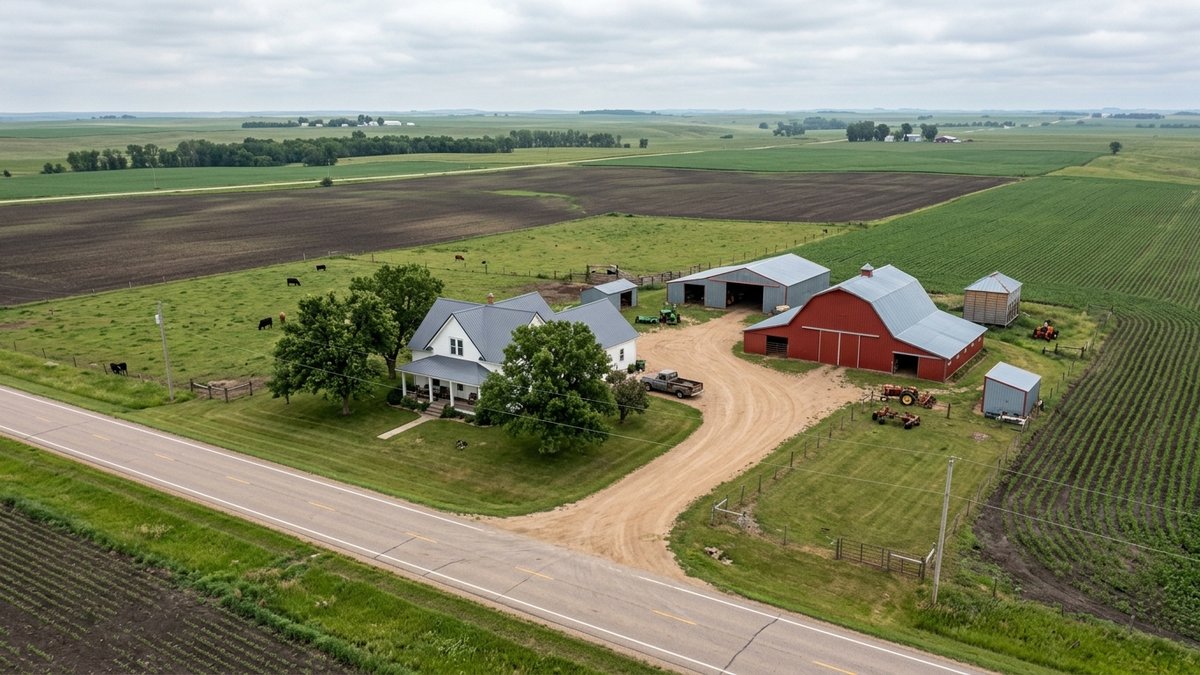
Walk the property with the deed, legal description, plat, and any prior survey available. Compare visible fences, posts, tree lines, driveways, buildings, and field use with the documents. Treat a mismatch as a question to investigate, not as proof that one source is correct. A long-standing fence can still conflict with a recorded line, and a map display can simplify a boundary that needs professional review.
South Dakota law covers boundaries, monuments, survey corners, plats, easements, and recorded property instruments. The state-law summary also notes that state law requires registered surveyors for surveys and protects boundary monuments. If a corner marker is missing, damaged, unclear, or inconsistent with another record, pause the assumption and ask a registered surveyor or the appropriate public office how the issue should be examined.
Do not move, replace, or rely on a marker because it appears to solve the problem. The point is to identify the record and field evidence that a qualified surveyor can evaluate. The purchase decision becomes clearer when the boundary question is named precisely instead of hidden under a fence line or a map pin.
Which records and property rights should you compare?
Build one records packet and compare each item against the same acreage. Begin with the deed and legal description, then add the recorded plat, prior surveys, title exceptions, easements, access agreements, and corner records. Ask the title professional or attorney handling the property-specific review to explain items that affect ownership, access, use, or responsibility.
Access deserves its own line. A road or driveway visible in the field does not answer whether the property has the documented right to use it, whether the route is shared, or who carries a maintenance obligation. Look for recorded access information and flag any route that depends on an informal arrangement or an answer that has not been confirmed. The appropriate title, legal, county, or survey professional can identify what needs further review.
Easements also need more attention than a label on a map. An easement or utility corridor can affect where access, lines, or other permitted uses cross the acreage. Compare its recorded location with the ground and with the improvements you care about. Ask the utility or public office about service questions, and use this South Dakota acreage electric-service guide for related property setup questions.
Then check for conflicts between occupied use and the records. Flag a fence that appears to cross a line, an outbuilding or driveway close to a boundary, an encroachment from a neighboring parcel, a shared road, or a utility route that does not match the paperwork. The goal is not to decide the legal answer from the driveway. It is to send a clear question to the professional who can answer it.
How should you walk the acreage before treating the line as settled?
Walk the acreage with the records in hand and compare the documents with the way the land is actually used. Start at the corners or other reference points shown in the available records, then follow the apparent boundary around the parcel. Note fences, posts, drives, buildings, utility features, shared roads, and areas where the line becomes difficult to identify.
The walk is a fact-gathering step, not a substitute for a boundary survey. A visible corner marker can be useful evidence, but its appearance does not by itself answer whether it is the correct monument for the parcel. A missing marker does not make the neighbor’s fence the boundary. When the field conditions and records disagree, keep both observations and send the conflict to a registered surveyor.
Pay attention to occupied use on both sides of the apparent line. A fence may extend beyond a boundary. A driveway may serve more than one parcel. A building, buried utility, or access route may sit close enough to affect the purchase even when it is not the feature that first caught your eye. Flag each condition by location and connect it to the deed, plat, survey, easement, or title exception that might explain it.
This is also where an acreage buyer can separate a simple unknown from a material uncertainty. A line that affects a preferred building area, a road, a utility connection, a fence, or the use of an outbuilding deserves more attention than a line that has no effect on the planned ownership. The relevant surveyor, title professional, attorney, county, or utility can help determine the next review.
What is a practical South Dakota acreage boundary checklist?
Use the same checklist for every acreage you are seriously considering. Record what is documented, what is visible on the ground, what remains uncertain, and which qualified professional or public office can answer the question. This keeps a persuasive fence line or a clean map display from receiving more weight than the records support.
| Check | Collect or compare | Pause for a qualified review when |
|---|---|---|
| Legal description | Deed, legal description, and recorded plat | The description does not match the property information being used |
| Survey status | Prior survey and the type of current inspection or survey | Boundary location affects the purchase but no boundary survey answers it |
| Corner monuments | Corner records and visible markers | A monument is missing, damaged, unclear, or inconsistent |
| Easements and access | Title exceptions, recorded easements, access agreements, and shared roads | Legal access or maintenance responsibility is uncertain |
| Fences and improvements | Fences, buildings, driveways, and occupied use compared with records | A feature may cross or sit close to the apparent line |
| Utility corridors | Recorded utility information and the route visible on the ground | A line or corridor may limit the intended use of the acreage |
| Neighboring use | Encroachments, shared routes, and boundary conflicts | The field use and the documents point in different directions |
| Next professional | Registered surveyor, title professional, attorney, county, or utility | The answer affects the offer, access, improvements, or ownership plan |
No single document answers every acreage question. A deed describes the interest being transferred. A recorded easement can explain a right or burden. A survey can locate boundaries. A title professional or attorney can address the property-specific meaning of recorded instruments. A utility or county office can answer the service or public-record question within its role. Keep those responsibilities separate.
If a boundary issue remains open, put the uncertainty in writing and identify the next person who needs to review it before the relevant deadline. Do not build a purchase decision around the assumption that a fence, map line, or mortgage inspection settled the matter. For help coordinating the real estate side of a South Dakota acreage search, contact Move to SoDak with the property documents and the questions you want to resolve.
Frequently asked questions
Is a fence the legal boundary of a South Dakota acreage?
Not by itself. A fence shows an existing pattern of use, but the boundary needs to be compared with the deed, recorded records, monuments, and appropriate survey work for the parcel.
Is a mortgage inspection the same as a boundary survey?
No. The South Dakota Board of Technical Professions distinguishes a mortgage inspection from a legal boundary survey. When boundary location matters, ask a registered surveyor about the survey work appropriate for the property.
Who can perform a property boundary survey in South Dakota?
The research states that South Dakota law requires registered surveyors for surveys. A registered surveyor can explain the work and records needed for the boundary question on a specific acreage.
What records should I gather before buying an acreage?
Gather the deed, legal description, recorded plat, prior surveys, title exceptions, easements, access agreements, and available corner records. Compare those documents with fences, buildings, roads, utilities, and occupied use on the ground.
What if a corner marker is missing or does not match the fence?
Treat it as an unresolved boundary question. Do not use the fence or another visible marker as the final answer. Ask a registered surveyor and the appropriate title, legal, county, or other professional to review the records and field conditions.
Sources South Dakota Board of Technical Professions: FAQ · South Dakota Legislature: Codified Law Title 43
Related South Dakota resources

Work with Michelle Maloney
Bring Michelle the town, property type, timeline, and the decision you are stuck on. She will help you compare Sioux Falls, Vermillion, Yankton, Tea, Beresford, Elk Point, and the Sioux City corridor against the way you actually need to live or sell.