
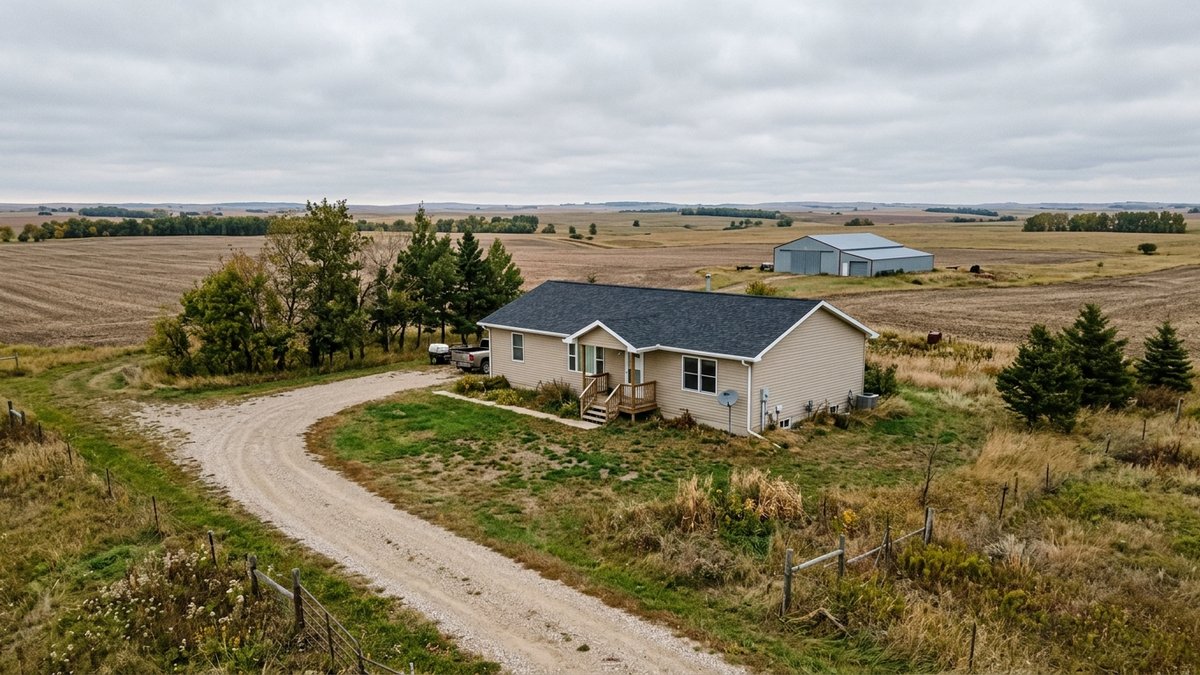
Why is a line at the road not enough?
A listing that says power nearby may describe a distribution line along the road. It may not mean the acreage has an active meter, adequate capacity, a usable route to the preferred homesite, or a service arrangement that fits a shop and future outbuildings. On rural property, electric service belongs in the same early review as the well, septic system, access road, and building envelope.
Start with the exact parcel and intended use. Write down the house location, well pump, septic pump, heating system, shop, barn, livestock waterers, irrigation, EV charging, solar, and any second home or rental idea. The utility can evaluate a real load list more usefully than a general question about whether electricity is available.
Use the site’s South Dakota acreage buying guide to keep electric questions connected with access, water, wastewater, boundaries, and the property’s future use. The goal is not to reject every rural home. It is to replace an assumption with a service answer and a cost range.
Which utility serves the acreage?
Identify the serving utility before comparing plans or estimating an extension. South Dakota law includes assigned electric-service-area provisions, so the closest visible line does not automatically tell you which provider serves the parcel. Contact the utility’s engineering or new-construction department rather than relying only on a billing representative or listing description.
Request written confirmation of the service address, meter number, active or idle status, utility-owned line endpoint, overhead or underground arrangement, available voltage, phase, and amp capacity. Ask about design fees, site visits, deposits, easements, construction timing, and the division between the utility’s work and the customer’s work. If the parcel is near a municipal boundary or a different cooperative’s line, ask the utility to confirm the service territory directly.
A service answer should identify the intended building site, not just the parcel. Moving the homesite after closing can change the line length, trenching route, pole placement, transformer needs, and total cost. Keep that answer with the other acreage records.
Can the existing service support the planned load?
Capacity is a separate question from proximity. An older farmhouse service may support the current house but not a modern home, electric heat, a large shop, a welder, an EV charger, grain equipment, or heated livestock waterers at the same time. Ask whether service is single-phase or three-phase and what amperage can be delivered at the intended building site.
Ask the utility to identify transformer, conductor, line-extension, or service-design changes. Three-phase availability can matter for agricultural and acreage businesses, but it is not a feature to infer from a listing or from a line visible across the road. Solar and battery systems can involve separate interconnection and metering requirements. A future second home or subdivision can also change the evaluation.
Compare the load list with the property you will actually own. Include well and septic pumps because an outage affects more than lights. It can affect water, wastewater pumping, livestock watering, refrigeration, heating controls, and freeze protection. A simple capacity conversation before the offer is easier than redesigning the homesite after closing.
What will the electric upgrade really cost?
Request a preliminary written estimate or a site-specific cost range before the inspection or other contract review period expires. Possible costs include utility design and engineering, new poles, transformers, conductors, line extension, customer contributions, easement work, route clearing, a meter pedestal, service-entrance equipment, trenching, conduit, underground secondary cable, panel upgrades, and feeders to detached buildings.
Do not budget only for the meter. The utility may bring power to a defined point while the owner funds the route from that point to the house, shop, barn, gate, well, or future building pad. Sioux Valley Energy’s independently reviewed 2026 work-plan minutes report member contributions toward new service-line extension costs. That is a useful reason to ask the local utility how its cost boundary works; it is not a statewide price quote.
Ask Southeastern Electric or the relevant cooperative about new-account deposits, idle-service classifications, and current construction policies when an existing service is unused. Its service page lists a refundable deposit for new accounts and directs new-construction customers to an idle-services policy. Treat another cooperative’s policy as an example only.
What should an electrician inspect on the property?
The utility can describe its side of the meter. A qualified electrician can inspect the customer-owned system. Schedule that review during the normal home inspection period, especially when the property has an older panel, detached buildings, an unused service, or additions that may not match the original design.
The inspection can cover the main panel’s size, condition, labeling, grounding, bonding, service mast, weatherhead, meter equipment, subpanels, feeders, and visible signs of overheating, corrosion, water intrusion, or damaged components. Look at the route and condition of service to the well, septic pump, barn, shed, grain bin, gate, and detached garage. Check whether overhead lines have clearance from driveways, roofs, equipment routes, and planned shop entrances.
If a generator or transfer equipment is present, record what it actually serves and whether it is installed correctly. A generator can change outage planning, but it does not remove the need to understand fuel, maintenance, transfer-switch capacity, and the systems that remain outside the backup circuit.
How can you evaluate outage and winter exposure?
Ask the seller and nearby neighbors about real-world performance over the past several years. Useful questions include how often outages occur, how long typical outages last, whether wind, ice, lightning, trees, wildlife, or vehicle damage cause most interruptions, and whether the acreage sits on a remote spur with limited redundancy. Ask how winter storms affect the road and whether the generator powers the well, septic system, heating controls, refrigerator, internet equipment, or livestock water.
The South Dakota Rural Electric Association publishes outage information by county and cooperative. Its map is useful for identifying the responsible cooperative and checking current disruptions, but it does not replace a conversation about the parcel’s history or line configuration. Ask for utility bills when comparing operating costs, and ask the seller about known voltage drops, flicker, repairs, generator service, or equipment damage.
For a remote purchase, compare outage exposure with the household’s tolerance and the property’s needs. The site’s South Dakota remote home inspection guide can help coordinate the electrician, inspector, utility records, and questions when the buyer cannot be present for every visit.
Could easements limit a future homesite or shop?
Review the title commitment, survey, plat, and recorded easements with the preferred building envelope in mind. Look for utility routes crossing the buildable area, poles and guy wires near a future driveway, transformers that constrain a shop, shared private lines serving another property, and rights that allow utility access across the acreage. Ask whether fencing, excavation, trees, landscaping, or structures are limited near the facilities.
Decide where the house and shop belong before asking for a final service design. A route that works for today’s farmhouse may not work for a new building several hundred feet away. Contact South Dakota 811 before any excavation, including trenching, post-hole work, fencing, water-line work, foundation work, or landscaping. Privately owned lines between a meter and a building may need a separate private locate.
For more title context, review what a title company does in South Dakota home buying. The title and utility conversations answer different questions, but together they show whether the preferred building plan is legally and physically practical.
What should the offer-period checklist include?
Before the deadline, collect five answers: who serves the parcel and what service exists; whether capacity matches the planned load; what the utility and private-side work will cost; how outages and winter access affect the property; and whether easements preserve the preferred homesite, shop, well, and septic locations. Mark every answer as documented, estimated, or unresolved.
When an answer remains unresolved, the buyer can discuss more time, a specific contingency, or a different property with the appropriate real-estate professional. The purchase agreement controls the actual rights and deadlines. A verbal statement that power is available is not the same as a utility assessment, an electrician’s report, or a clear extension estimate.
The best acreage comparison is not the property with the shortest visible distance to a line. It is the property where service territory, capacity, cost, reliability, building flexibility, and records all make sense together. That approach makes rural South Dakota home buying more predictable without pretending that every utility question has the same answer.
Frequently asked questions
Does a power line at the road mean a South Dakota acreage is ready to build on?
No. Confirm the assigned utility, service status, endpoint, capacity, building-site route, extension requirements, and customer-owned work with the utility for the exact parcel.
Who pays to extend electric service to a rural South Dakota home?
The answer depends on the utility, route, design, service type, and cooperative policy. Ask for a written estimate that separates utility work from the owner's trenching, meter, panel, and private-side installation costs.
Should an acreage buyer inspect the electrical system separately from the home inspection?
A qualified electrician can evaluate customer-owned panels, feeders, grounding, outbuilding service, and equipment that a general inspection may not fully assess. Coordinate the review during the property inspection period.
How do I compare rural electric reliability before buying?
Ask the seller and neighbors about outage frequency, duration, causes, voltage issues, and winter access. Use the South Dakota Rural Electric Association outage map to identify current cooperative and county information, then ask the utility about the parcel.
Sources South Dakota Legislature Codified Law 49-34A · Sioux Valley Energy 2026 Work Plan and Budget · Southeastern Electric Cooperative Start, Stop or Request Service · South Dakota Rural Electric Association Outage Map · South Dakota Rural Electric Association Locate Underground Utilities
Related South Dakota resources

Work with Michelle Maloney
Bring Michelle the town, property type, timeline, and the decision you are stuck on. She will help you compare Sioux Falls, Vermillion, Yankton, Tea, Beresford, Elk Point, and the Sioux City corridor against the way you actually need to live or sell.