
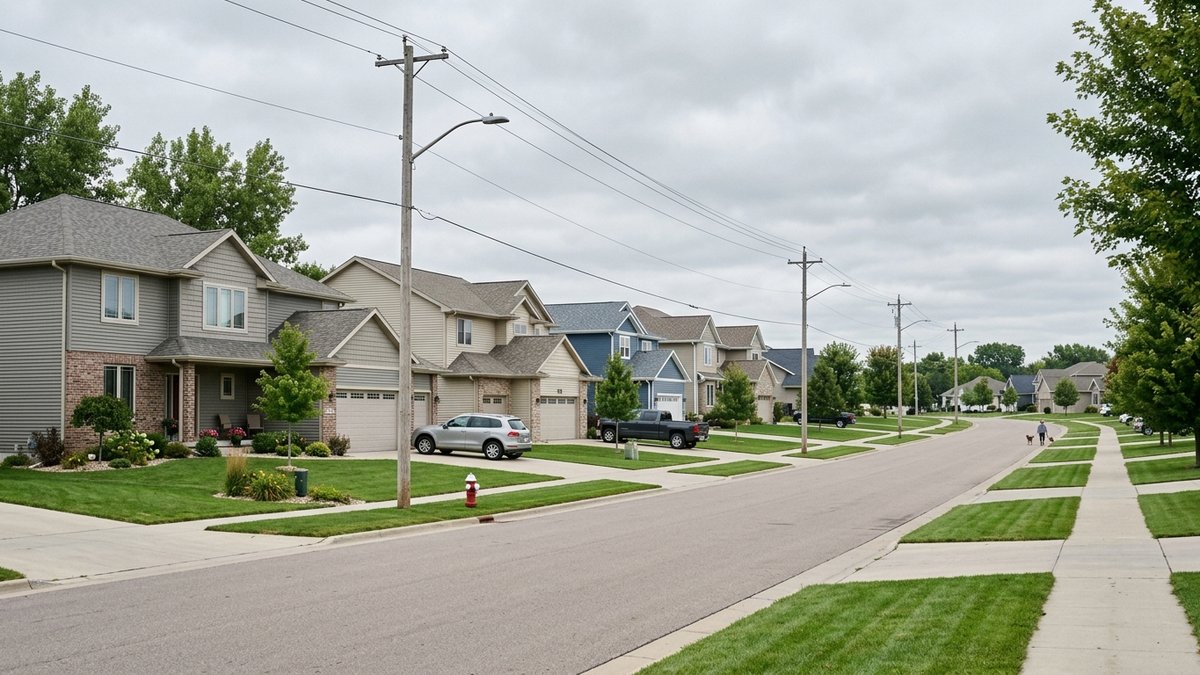
Is a home without a basement a problem in South Dakota?
It is not a deal breaker, but it is a real catch. On June 24, 2003, 67 tornadoes touched down in South Dakota, tying the U.S. record for the most tornadoes in one state in a 24-hour period. If the slab-on-grade ranch, the townhome or the manufactured home on a few acres is the one that fits your budget, that is fine. You need to know where you would go when a tornado warning comes, and that answer is easier to find before closing than during the first spring storm.
National Weather Service guidance names three kinds of places to go in a tornado warning: a basement, a safe room, or an interior room with no windows on the lowest floor of the house. A house without a basement still has the third option if it has the right kind of room.
The catch gets bigger with a mobile or manufactured home. The National Weather Service says a mobile home is not a safe place to shelter from a tornado and tells people in one to get to a sturdy building. A buyer looking at one needs a plan that includes leaving it.
Where would you shelter in a house with no basement?
Look for the small room in the middle. The target is an interior room on the lowest floor with no windows. That might be a hall bathroom, a closet or a laundry room, if one sits in the center of the floor plan and has no window. In a two-story home, the room you want is on the ground floor.
Walk the house with that question in mind on your first or second showing. A floor plan with windows in every room, or a main floor that is mostly open space, leaves you fewer choices. A townhome or condo adds one more question. Is there a room like that inside your own unit? The townhome or single-family comparison covers the other trade-offs of attached living.
What to check on a showing
- The room itself. Find a room on the lowest floor with no windows, toward the middle of the house.
- Size. Count who would be in there, including pets. Federal guidance says to include pets in the plan.
- The path to it. Picture getting there from the bedrooms at night. Stairs, a long hallway or a cluttered garage path all slow you down.
- A clear floor. A closet packed with storage only works as a shelter if you can empty it quickly, so picture the room with your things in it.
If the house you like has a basement after all, the shelter question gets simpler and a different one moves up the list. The basement moisture questions are the ones to ask before an offer.
What changes if the home is a manufactured home?
Your shelter plan has to leave the house. National Weather Service guidance speaks of mobile homes, says they are not safe in a tornado and tells people in one to get to a sturdy building. If the home you are considering is a manufactured home, plan as if that guidance applies, and ask the county’s emergency management office if you are unsure.
That turns a property question into a distance question. Before you buy, find the nearest sturdy building you could reach, such as a church or a relative’s home, ask whether you would be welcome there in a storm and drive the route. A shelter that sits across a rural highway or down a gravel road is a different plan from one next door. The trip has to fit inside the time between a warning and the storm. Write the route and the address down for anyone who stays at the house, including guests and older children, so the plan does not depend on one person being home.
If the nearest sturdy building is several minutes away, weigh that against the price and the land. A manufactured home on acreage can still be the right purchase. It may also make sense to compare it with a site-built home nearby that has a basement or an interior room you could use, so the shelter question is part of the decision from the start.
Manufactured homes raise other questions as well, from how the home is titled to how it sits on the land. The manufactured home and real property guide covers those.
Can you add a safe room after you buy?
Sometimes. Reinforcing an interior room is one option for a house without a basement, and FEMA publishes guidance for it, including Taking Shelter from the Storm: Building a Safe Room Inside Your House.
Whether that works in a particular house is a question for a qualified contractor, not a showing. If a safe room is part of your plan, ask a contractor to look at the space before you count it into the budget. In a townhome or a home with an association, ask early whether the association has rules that affect that kind of work.
Questions to ask the seller
The seller has lived through storm seasons in the house, so ask:
- Where did you go during tornado warnings?
- Is there a safe room or storm shelter, and do you have any paperwork on how it was built?
- Have you added any shelter spot, such as a reinforced closet, that a buyer would not notice on a showing?
- If you ever left the house during a warning, where did you go?
The answers will not replace your own walk-through, but they tell you how the people who know the house handled the same problem. You do not need a contractor’s answer before you write an offer. You do want to know whether a workable shelter spot exists, so you can compare a slab home against one with a basement on more than price.
How will you hear a warning at the new address?
Set up more than one way, because a move changes all of them. Communities warn people in different ways, and some use outdoor sirens. Sign up for whatever warning system your new community offers, and if it has sirens, learn what the warning tone sounds like.
NOAA Weather Radio is the indoor backup. It broadcasts National Weather Service warnings and other alerts, and a radio in the bedroom covers the overnight storm when your phone is charging in another room. Check your phone’s settings too, so emergency alerts are turned on before the first storm season at the new address, and make sure everyone in the household has done the same.
Know where the two main alerts come from before your first storm season in the house:
- Tornado watch. Watches come from the Storm Prediction Center. Use a watch as the cue to review your plan and check your shelter spot.
- Tornado warning. Warnings come from your local National Weather Service office. When a warning is issued, go to your shelter spot.
Practice the plan after you move in, then regularly, and agree on an emergency meeting place in case the household gets separated. Walk everyone, pets included, from the bedrooms to the shelter spot and time it. If the plan sends you to a neighbor’s or relative’s house, make that trip once in daylight and once after dark. Keep the radio, a flashlight and shoes in or near the shelter spot so nobody has to hunt for them during a warning.
The local pieces, such as how a county sounds its sirens and when it tests them, are worth a call to the county’s emergency management office after you move. If you are still comparing towns and property types, the relocation guide is a good place to line up the bigger decisions, and a local agent can help you weigh a basement against the homes that fit the rest of your list.
Frequently asked questions
Can an interior bathroom be my tornado shelter spot?
It can, if it fits the guidance: an interior room on the lowest floor with no windows. A bathroom with a window, or one on an upper floor, does not fit that description, so look for another room.
What is the difference between a tornado watch and a tornado warning?
Watches come from the Storm Prediction Center and are your cue to review the plan. Warnings come from your local National Weather Service office, and a warning is the time to go to your shelter spot.
Can I build a safe room in an existing house?
Reinforcing an interior room is one option, and FEMA publishes guidance on it, including Taking Shelter from the Storm: Building a Safe Room Inside Your House. Talk with a qualified contractor about whether the house you are buying has a workable spot.
Are outdoor sirens enough?
Do not count on one alert. Communities warn people in different ways, and some use outdoor sirens, so set up indoor alerts too, such as a NOAA Weather Radio and your phone.
SourcesNational Weather Service Sioux Falls, June Tornadoes in South Dakota Tie National Record · National Weather Service Sioux Falls, 2003 Climate Summary · National Weather Service, Tornado Safety: Prepare · National Weather Service, Tornado Safety: During · National Weather Service, Tornado Watch vs. Warning · Ready.gov, Tornadoes · NOAA Storm Prediction Center, The Online Tornado FAQ · National Weather Service, NOAA Weather Radio All Hazards
Related South Dakota resources

Work with Michelle Maloney
Bring Michelle the town, property type, timeline, and the decision you are stuck on. She will help you compare Sioux Falls, Vermillion, Yankton, Tea, Beresford, Elk Point, and the Sioux City corridor against the way you actually need to live or sell.