
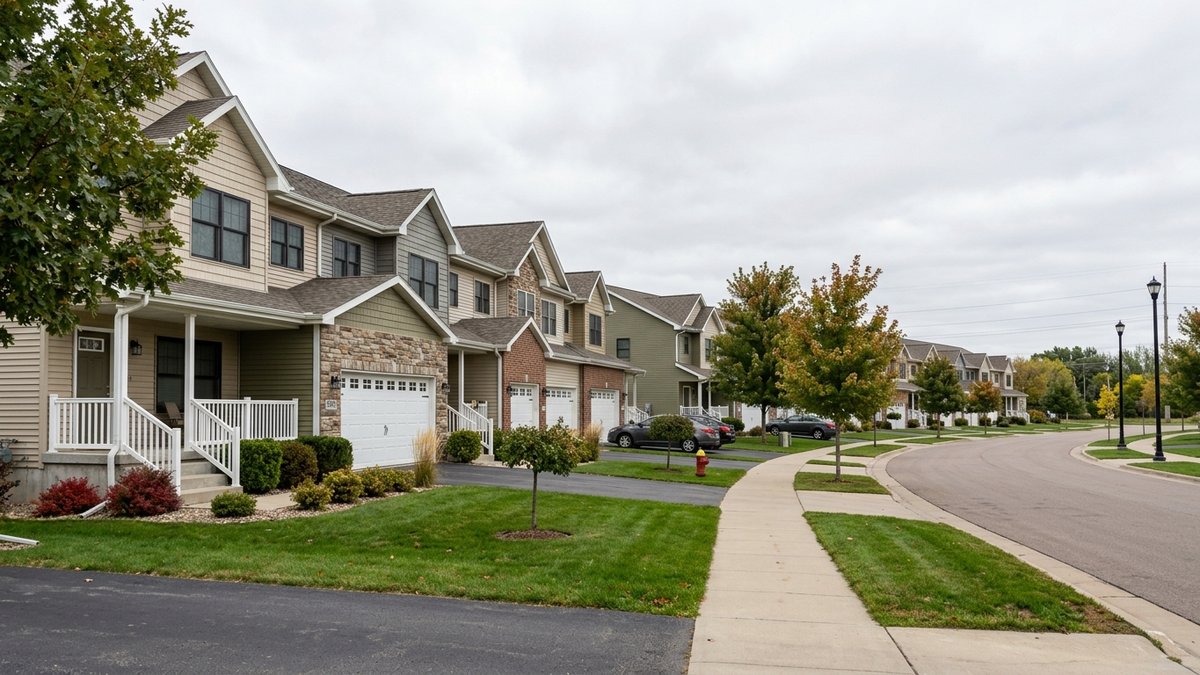
Which home type fits your South Dakota move?
A townhome fits a buyer who values less day-to-day exterior work and is comfortable sharing walls, paying association dues, and following property rules. A single-family home fits a buyer who values privacy, a yard, storage, and control and can plan for the work and repair responsibility that comes with a detached property.
That sounds straightforward until you compare two actual homes. A townhome association may maintain some exterior features, but the declaration and rules determine what happens with the roof, siding, windows, driveways, snow, landscaping, shared areas, and other items. A single-family home may have no association dues, but the owner carries the direct work and cost for the exterior items the community would otherwise share or manage.
The right comparison is not townhome versus house in the abstract. It is property A versus property B, with the responsibilities written down. Start with the purchase payment, property taxes, personal insurance, association dues, expected exterior work, storage, parking, privacy, and the repair reserve each home requires. Mark every item that is unclear.
If you are still comparing the broader move, the South Dakota relocation guide can help with statewide context. The housing choice itself needs a property-specific review of documents, costs, and maintenance responsibilities.
What does a South Dakota townhome make easier or harder?
A townhome can make exterior upkeep easier when the association is responsible for work that a detached homeowner would handle directly. That can support a buyer who wants a simpler routine or expects to spend less time on snow, lawn, or other outside tasks. Confirm the actual scope before treating the association as a maintenance solution.
The tradeoff is shared responsibility. A townhome buyer may live beside another household, pay regular dues, follow rules about the property, and face an assessment or a dues change tied to the association’s finances and repairs. The current budget, reserve information, recent meeting minutes, assessment history, and master insurance declaration can reveal questions that the listing description will not answer.
Ask whether the documents identify responsibility for roofs, siding, windows, driveways, snow, landscaping, parking, shared spaces, and exterior systems. Ask what happens when a repair affects more than one unit. If the documents use a term that is not clear, flag it for the association, title professional, attorney, insurer, or another responsible professional instead of relying on a casual explanation.
Also test the lifestyle fit. Shared walls may affect how much quiet and separation you want. Rules may address pets, rentals, exterior changes, parking, storage, or other uses. The issue is whether the actual rules fit the way you plan to own the home.
What does a single-family home put on the owner?
A single-family home gives the owner more direct control over the yard, exterior choices, storage, and daily use, but that control comes with direct responsibility. Price snow removal, landscaping, exterior systems, and larger repairs instead of assuming they will remain occasional or inexpensive.
A detached home can make privacy and outdoor space easier to prioritize. It can also give you more room for storage and fewer shared-wall concerns. Those benefits are real only when the home, lot, and budget support them. A larger yard can add work. More exterior systems can create more maintenance decisions. A home without association dues can still have significant recurring ownership costs.
Build the comparison around the exact property. Record the age and condition of major exterior items, who handles snow and landscaping, what maintenance is already documented, and what you would need to arrange after moving. Ask the inspector which conditions need attention and ask qualified contractors for property-specific questions when the inspection points to a larger repair.
Insurance is another direct responsibility. The South Dakota Division of Insurance advises consumers to read policy coverage, limits, deductibles, exclusions, replacement-cost terms, and water-loss treatment. Ask an insurer to explain how the exact home would be covered. Do not assume a detached home or a townhome has the same policy boundaries.
How should you review association documents and insurance?
Request the townhome’s declaration, bylaws, rules, current budget, reserve information, recent meeting minutes, assessment history, and master insurance declaration before treating the monthly dues as the complete answer. These documents can show both the services included in the dues and the responsibilities that remain with the owner.
Create a responsibility list with three columns: association responsibility, owner responsibility, and unclear until a professional confirms it. Put each item in one column. Include the roof, siding, windows, driveways, snow, landscaping, shared areas, exterior systems, water losses, interior finishes, and any other feature that affects the decision. If the documents conflict or use language you cannot interpret, keep the item in the unclear column.
The South Dakota Division of Insurance explains why coverage limits, deductibles, exclusions, replacement cost, and water-loss terms matter. The state statute supplied for this comparison also makes property disclosure and association-document review relevant to the purchase process. Treat that information as a reason to review the exact documents with the appropriate professionals, not as a substitute for property-specific legal or insurance advice.
For a deeper look at the insurance side of a South Dakota purchase, read the homeowners insurance comparison guide. Compare the actual policy questions and association allocation for each home. A lower premium or lower dues number does not explain every responsibility.
What belongs in the full monthly cost comparison?
Compare the full cost of owning each property, not only the list price or association dues. The monthly picture should include the purchase payment, property taxes, personal insurance, association dues when applicable, expected snow and lawn work, routine exterior maintenance, and a reserve for larger repairs or assessments.
Use the same worksheet for both homes. That keeps a townhome’s visible dues from being compared with a single-family home’s invisible maintenance budget. It also keeps a detached home’s lack of dues from being mistaken for a lack of shared or future costs.
| Cost or responsibility | Townhome question | Single-family question |
|---|---|---|
| Association dues | What do the dues cover, and how can they change? | Is there an association or shared-road obligation? |
| Exterior work | Who handles roof, siding, windows, snow, and landscaping? | What will the owner handle directly? |
| Insurance | What does the personal policy cover, and what does the master policy cover? | What coverage, limits, deductibles, and exclusions apply? |
| Assessments and repairs | What reserves, recent assessments, and planned work are documented? | What exterior systems may need a repair reserve? |
| Use and storage | What rules affect parking, pets, rentals, changes, or storage? | What lot, yard, and storage limits affect the plan? |
| Shared-wall fit | How much shared-wall privacy is acceptable? | How much direct maintenance is acceptable? |
If a number is unknown, label it unknown. Ask the insurer, association, lender, inspector, title professional, contractor, or other responsible professional the question that fits their role. The comparison becomes useful when it shows both the expected monthly cost and the exposure that still needs an answer.
What should you decide before making an offer?
Before making an offer, decide which tradeoff you are actually choosing. If reduced exterior work matters most, confirm the association’s responsibilities, finances, rules, insurance boundaries, and assessment exposure. If privacy, yard, storage, and control matter most, confirm that you can budget and arrange the snow, landscaping, exterior maintenance, insurance, and repair responsibilities of the detached home.
Write down the conditions that would change your choice. Examples include an unclear roof responsibility, a master policy that leaves a coverage gap, a reserve concern, a rule that conflicts with your planned use, a shared-wall concern, or an exterior repair that changes the five-year cost comparison. Keep the question connected to the exact property and deadline.
Do not let the word townhome or single-family settle the decision for you. The documents, policy terms, inspection findings, association finances, and actual monthly comparison carry more useful information than the label. For help organizing the real estate side of a South Dakota move, contact Move to SoDak with the two properties and the questions you need to compare.
A townhome is not automatically easier, and a single-family home is not automatically more expensive. The better fit is the home whose responsibilities, rules, privacy, storage, insurance, and total cost match the way you plan to live and maintain the property.
Frequently asked questions
Is a townhome cheaper than a single-family home in South Dakota?
Not automatically. Compare the purchase payment, taxes, personal insurance, association dues, assessments, exterior work, snow and landscaping, and repair reserve for the exact properties.
What do townhome association dues usually cover?
The answer depends on the association documents. Review the declaration, bylaws, budget, rules, reserve information, minutes, and insurance documents to identify what the association maintains and what the owner must handle.
Do townhomes have less maintenance than single-family homes?
A townhome can reduce some day-to-day exterior work, but the owner may still have responsibilities, dues, rules, and assessment exposure. Confirm the specific allocation in writing.
How should insurance be compared for a townhome and a house?
Read the personal policy and any association master-policy information together. Compare coverage, limits, deductibles, exclusions, replacement-cost terms, and water-loss treatment with the responsible insurer.
Who should review South Dakota association documents?
Ask the association, title professional, attorney, insurer, lender, inspector, or another qualified professional the question that fits their role. Keep unclear responsibilities open until they are confirmed.
Sources South Dakota Division of Insurance: Homeowner's Insurance · South Dakota Legislature: Codified Law 43-4-44.1
Related South Dakota resources

Work with Michelle Maloney
Bring Michelle the town, property type, timeline, and the decision you are stuck on. She will help you compare Sioux Falls, Vermillion, Yankton, Tea, Beresford, Elk Point, and the Sioux City corridor against the way you actually need to live or sell.